The BetaCodex · New here?
Welcome to the BetaWorld
Most organizations are still run by command-and-control. There is an alternative, and it already works. Here is the short version.
Alpha or Beta?
Two ways to run an organization.
AlphaCodex organizing
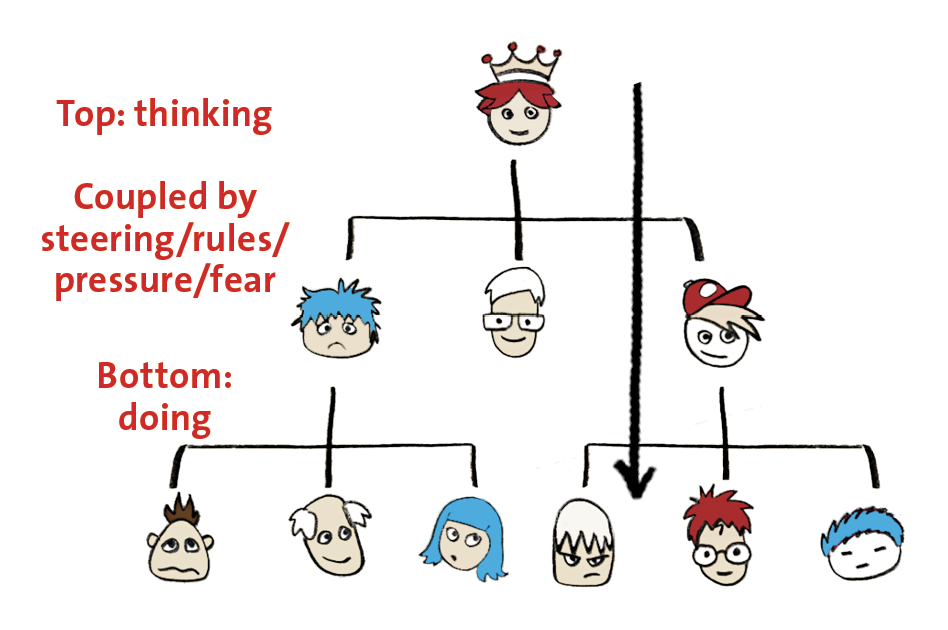
Illustration: BetaCodex Network
- Command-and-control: management as a social technology
- Made for the industrial age, out of time since the 1970s
- Built on “Theory X”: people need to be driven & controlled
- Still the default model of most organizations today
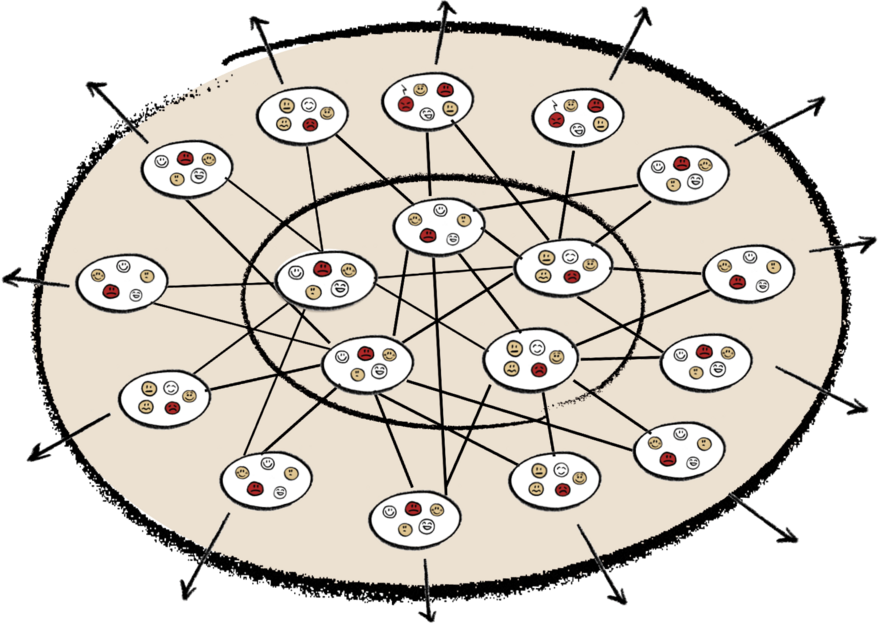
BetaCodex organizing
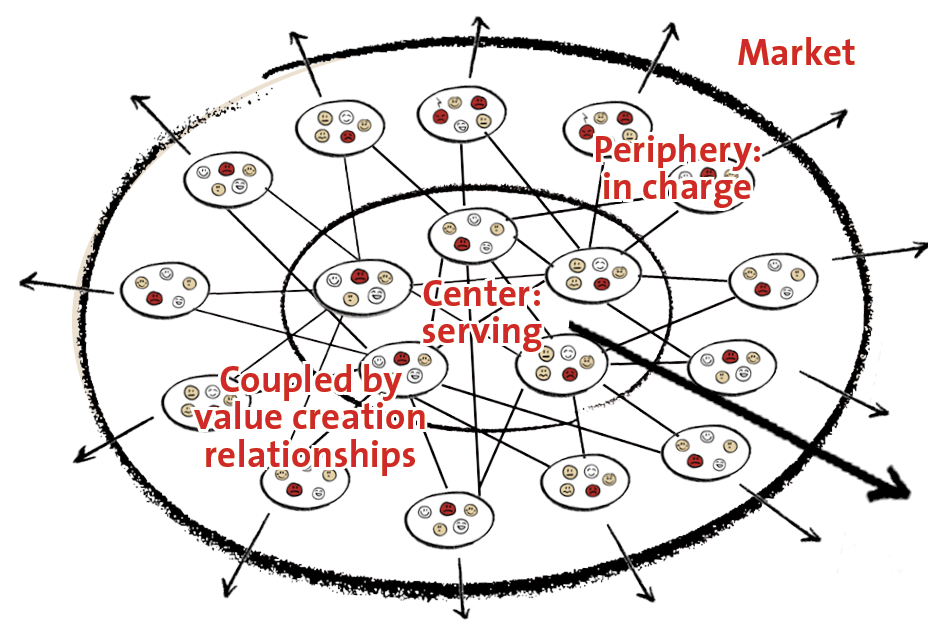
Illustration: BetaCodex Network
- Decentralized, self-organized, led by the market
- Made for today’s complex world
- Fit for human beings as they are (“Theory Y”)
- Practiced in few, yet highly varied organizations
Alpha is a zombie. It died in the 1970s – and keeps on walking.
What is the trouble with Alpha?
Most organizations are still built on command-and-control. We call it Alpha. It was made for the industrial age. When that age ended in the 1970s, Alpha fell out of time – but hardly anybody noticed.
So organizations keep applying its principles, its methods and its “Theory X” image of human nature. They are stuck in command-and-control mode. That is the bad news.
The question is not if Beta will prevail. The question is when.
Is there good news?
Yes. And it is twofold.
Complexity forces change
Markets have changed. The forces of complexity cannot be escaped, so the suffering under Alpha will be overcome in time. A renaissance of organizational leadership is inevitable.
Beta already exists
Beta does not have to be invented. Quite a few, very diverse organizations around the world already work this way – fit for complexity, and fit for people.
Heard of Lean, Agile or Beyond Budgeting?
Then you have met relatives of Beta.
- 1980sTotal Quality, Lean
- 1990sReengineering, socio-technical systems, organizational learning
- 1998Beyond Budgeting
- 2001Agile
- 2008BetaCodex
Scroll sideways for more years
Over the course of the last decades, many communities with ambitions related to Beta have sprung up. The Total Quality and Lean, or Reengineering communities, which started in the 1980s and 1990s, respectively, were early manifestations of this. Other communities existed or exist in the spheres of organizational development and org design, systems theory or systems thinking, such as the Socio-Technical Systems (opens in a new tab) movement, Society for Organizational Learning (opens in a new tab), or the organizational design movement. The Agile communities, and Beyond Budgeting (from which this network is an offspring) are further examples.
Some of these communities, Total Quality, Agile and Lean especially, opened themselves towards dramatic commercialization, which impacted both their scopes and their aims negatively. Other movements in this realm maintained more of a not-for-profit profile. It is clear today that none of them achieved the impact they could or should have had.
We firmly believe that the communities that remain serious about change will inevitably and gradually converge, over time. The reason for that is simple: The credibility of the Alpha model and its attraction are eroding fast.
- 01 The laws of the BetaCodex Twelve laws that describe how organizations work without command-and-control.
- 02 Cell Structure Design Organize from the outside in: cells at the periphery face the market, the center serves them.
- 03 Relative Targets Steer performance by comparing with peers and the market, not by fixed targets.
- 04 OpenSpace Beta How a whole organization becomes Beta, in 180 days.