The BetaCodex
Relative Targets
How to bring about a BetaCodex performance system? How to deal more constructively with targets, measuring, reporting, planning, performance management and pay? Relative Targets gives succinct answers to all these questions.
Two cornerstones. The other one is Relative Targets.
A practical expression of Beta
This is the second of the two BetaCodex-based “social technologies” that are cornerstones of all Beta organizations. One might say that this socio-tech is a practical expression of Beta in organizational life. You can find more about its sibling, Cell Structure Design, on a separate page.
Relative Targets is about complexity-robust performance systems for organizations of all kinds: Without planning, without a need for fixed targets or incentive schemes; without budgeting, cost management, allocations or cost cutting. Instead, Relative Targets put responsibility back into the hands of teams responsible for value creation and results. This powerful social technology builds on insights originated in the BBRT’s research from the early 2000s. Relative Targets was articulated and published as an open source social technology in 2021 by Niels Pflaeging (Red42) (opens in a new tab), under the license CC BY-SA 4.0, and can be found at www.redforty2.com/relativetargets (opens in a new tab). This page is derived from it.
Relative Targets is an open source social technology
Relative Targets is different than other performance system approaches.
It scales naturally
It does not require external training or maintenance.
It drives out coercion
It makes annual target-setting and planning exercises superfluous, while increasing transparency and control dramatically.
Teams as mini-enterprises
Most importantly: It empowers teams (or “cells”) to act as highly responsible mini-enterprises.
Live within a few months.
Get going with Relative Targets at any time. You can go live with a Relative Targets performance system within just a few months.
A company is successful and will survive if it gives a higher return than other companies in the same field. The real target is thus not an absolute sum in dollars and cents but a relative one. Beating the competition is the real target.
Jan Wallander (1920–2016)
Pioneers of Relative Targets
- Handelsbanken
- dm-drogerie markt
- W. L. Gore
- Buurtzorg
- Morning Star
Pioneers of Relative Targets like these have operated this kind of performance system for decades, and have become undisputed leaders of their industries.
The 10 principles of Relative Targets
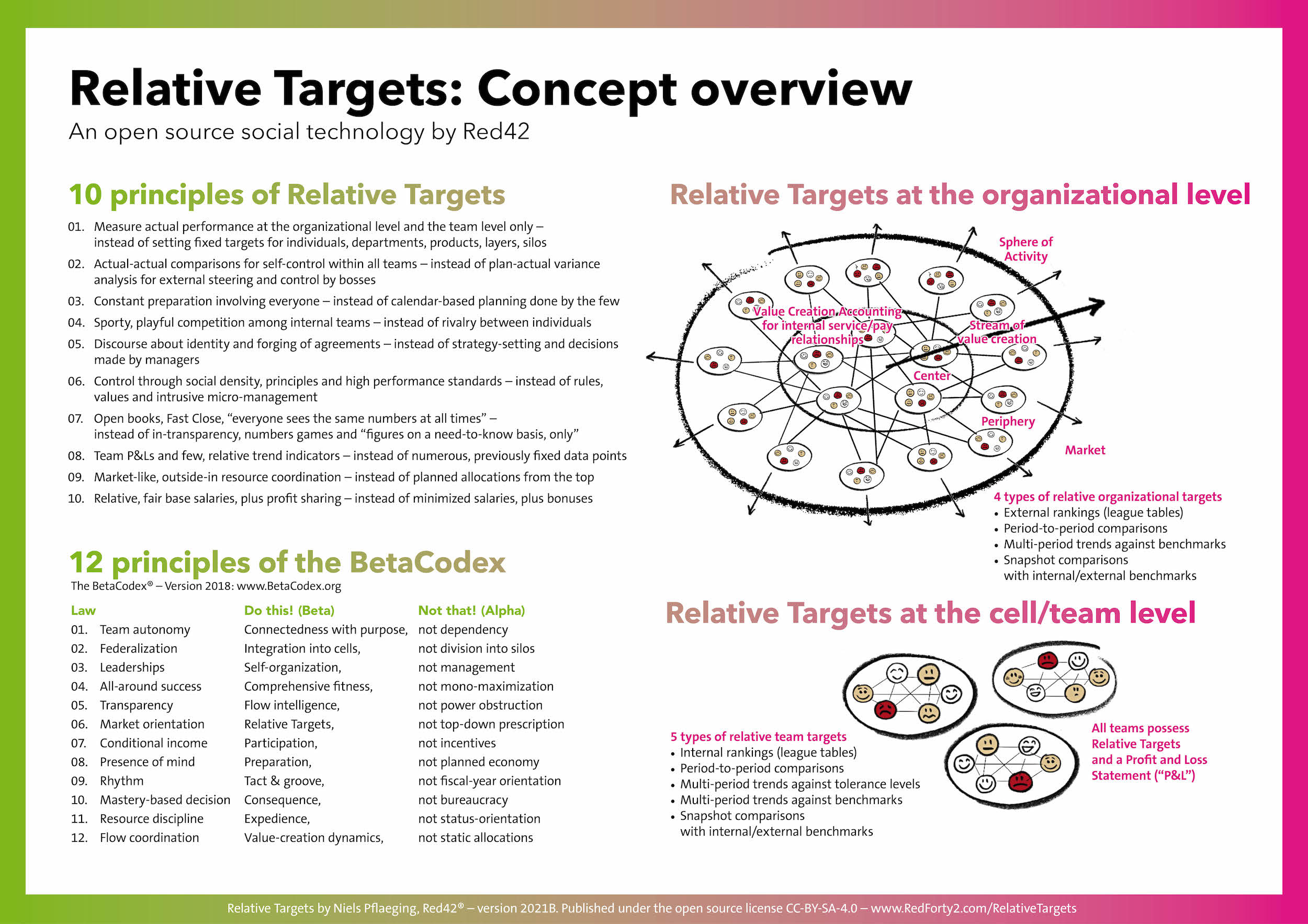
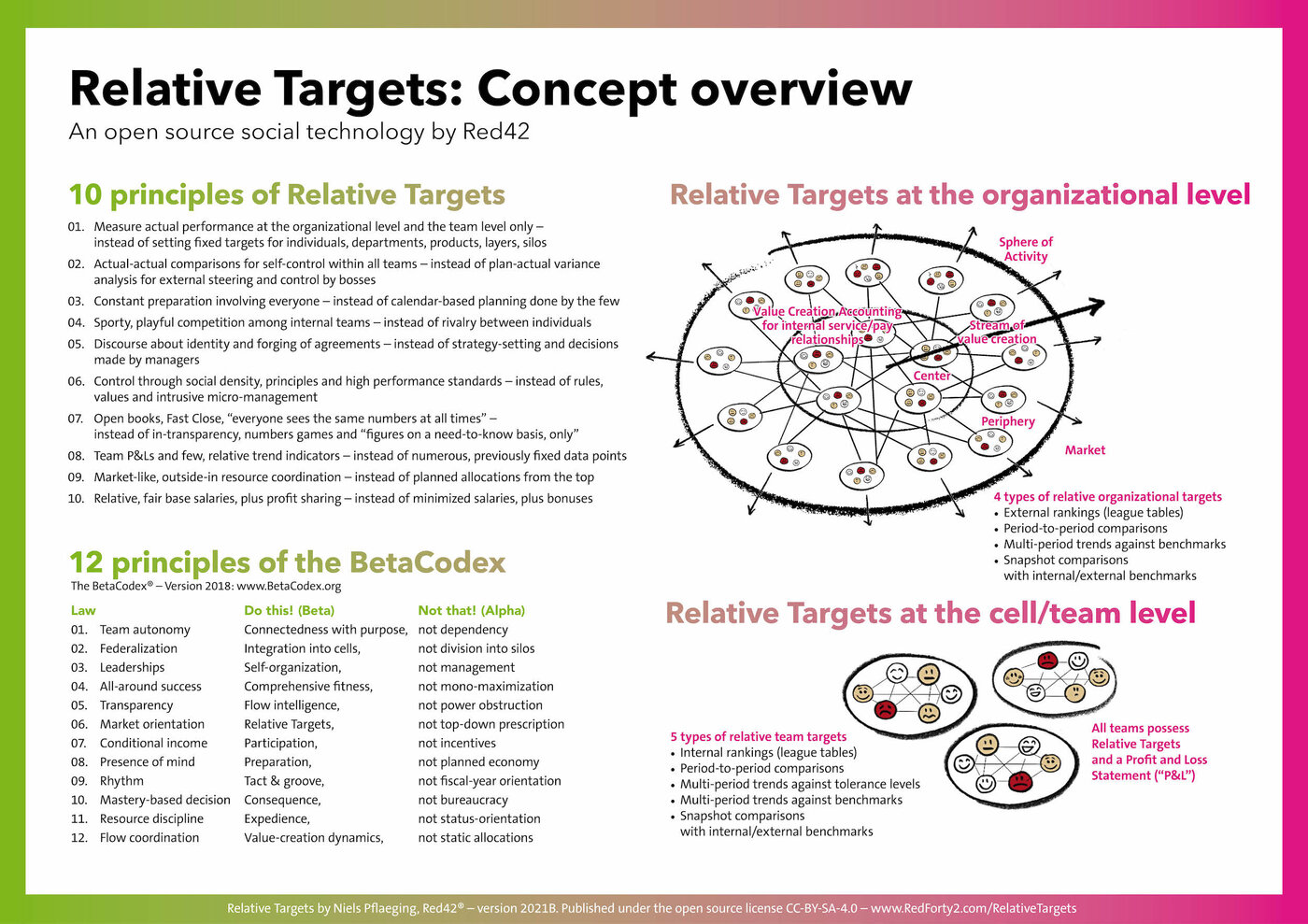
Relative Targets has four components: 10 principles of Relative Targets, 12 principles of the BetaCodex, Relative Targets at the organizational level, Relative Targets at the cell/team level.
-
Measure actual performance at the organizational level and the team level onlyinstead of setting fixed targets for individuals, departments, products, layers, silos
-
Actual-actual comparisons for self-control within all teamsinstead of plan-actual variance analysis for external steering and control by bosses
-
Constant preparation involving everyoneinstead of calendar-based planning done by the few
-
Sporty, playful competition among internal teamsinstead of rivalry between individuals
-
Discourse about identity and forging of agreementsinstead of strategy-setting and decisions made by managers
-
Control through social density, principles and high performance standardsinstead of rules, values and intrusive micro-management
-
Open books, Fast Close, “everyone sees the same numbers at all times”instead of in-transparency, numbers games and “figures on a need-to-know basis, only”
-
Team P&Ls and few, relative trend indicatorsinstead of numerous, previously fixed data points
-
Market-like, outside-in resource coordinationinstead of planned allocations from the top
-
Relative, fair base salaries, plus profit sharinginstead of minimized salaries, plus bonuses
Relative targets at two levels
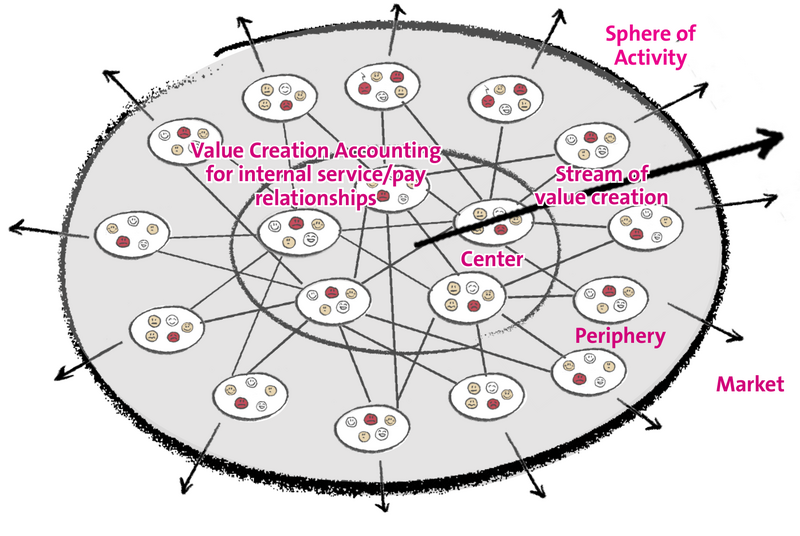
At the organizational level
4 types of relative organizational targets:
- External rankings (league tables)
- Period-to-period comparisons
- Multi-period trends against benchmarks
- Snapshot comparisons with internal/external benchmarks
At the cell/team level
5 types of relative team targets:
- Internal rankings (league tables)
- Period-to-period comparisons
- Multi-period trends against tolerance levels
- Multi-period trends against benchmarks
- Snapshot comparisons with internal/external benchmarks
All teams possess Relative Targets and a Profit and Loss statement (“P&L”).
Relative Targets as a poster
The concept on one page, to print, share and put on the wall.
Download the poster
- EnglishWeb JPG · 498.0 KBPrint PDF · 1.3 MB
- DeutschPrint PDF · 1.3 MB
- EspañolPrint PDF · 1.3 MB
- FrançaisPrint PDF · 1.3 MB
- PortuguêsPrint PDF · 1.3 MB
Watch an introduction to Relative Targets
You can buy Relative Targets-related products and use the learning resources on the www.relativetargets.com (opens in a new tab) web page.
Want to go deeper?
Sources on Relative Targets, chosen by the network.